Online Interview Body Language: 12 Tips to Look Confident on Camera
Today, the landscape of interviews has changed. Earlier, candidates used to dress formally for an interview, travelled to offices, sit in the waiting area, and interact face-to-face with recruiters. However, after the pandemic, virtual hiring has become the new normal in today’s corporate world. Companies use this to save time, reduce costs, enable remote hiring, and access global talent.
With this shift, one big question arises: Is body language as important in a virtual setting as it is in a traditional interview?
The simple answer is: Yes, body language is still powerful, only its form has evolved.
In a virtual interview, a candidate’s facial expressions, eye contact, posture, voice tone, gestures, camera presence and even background all send powerful signals to the recruiter. If a candidate is technically strong but appears dull on screen, distracted, or nervous, the recruiter’s mind may begin to doubt their confidence and authenticity.
That is why, for a modern professional, understanding the digital version of body language is extremely important.
In this article, we will explore how body language works in online interviews, how they differ from traditional interviews, its advantages and disadvantages, and practical tips to help candidates perform better.
Why Signals Often Have More Impact Than Words in Virtual setting
A significant part of human communication is made up of nonverbal cues. When we interact with someone, we not only communicate through words, but also judge their emotions, confidence and authenticity. Research consistently shows that body language plays a major role in building trust and credibility.
In a traditional interview, recruiter focus on a candidate’s walk, handshake, posture, sitting style, gestures and overall presence to get a complete picture of a candidate.
However, in an online interview, many of these signals become limited. As a result, the remaining cues often carry greater impact than they do in traditional interviews. This is known as the signal concentration effect, where the brain focuses more on the remaining cues. Therefore, mastering digital body language has become more important for modern career growth.
Let’s look into Tilly’s online interview experience:
Tilly had prepared well for her first online interview. She had revised her technical concepts, read about the company, and even practiced answering common interview questions. However, what she did not prepare for was the unfamiliar nature of the online interview environment.
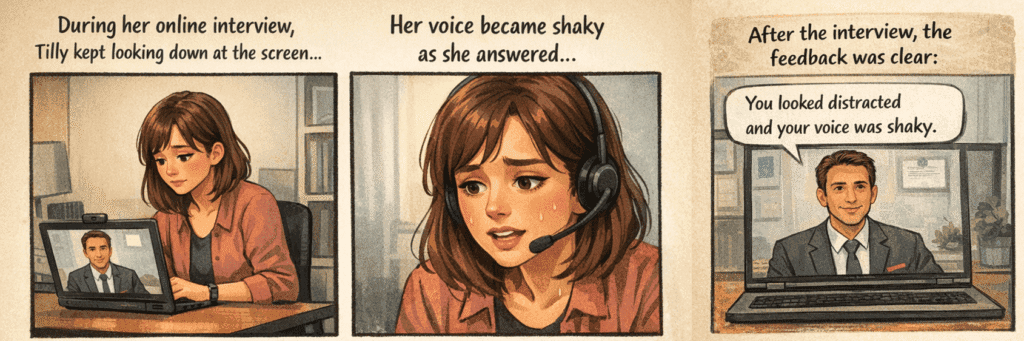
From that experience, Tilly understood that succeeding in online interviews is not only about what you say, but also about how you appear on screen as your gaze, voice stability, facial expressions, and overall digital presence will influence how recruiters perceive you.
Key difference: Online interview vs. Traditional interview
1. First Impression Formation:
- Virtual Interviews: The first impression starts when the camera turns on. Your facial expression, voice tone, greeting, eye contact with the camera, and overall screen presence become the primary factors. Even your background, lighting, and level of attentiveness can influence how the recruiter perceives you.
- Traditional Interviews: In face-to-face interviews, the first impression begins the moment you enter the office. Your walk, posture, handshake, eye contact, and even interaction with the receptionist can be noticed by the recruiter. Here, the impression builds gradually.
2. Body Language Visibility:
- Virtual Interviews: Here, mostly the upper body is visible: face and shoulders. Therefore, facial expressions, eye contact, and micro-signals become more important. Since the recruiter has limited visual cues, even small movements may appear magnified.
- Traditional Interviews: Here, the recruiter can observe full-body language: posture, gestures, sitting style, handshake, and overall presence. This gives them a more complete picture of the candidate’s personality and confidence.
3. Eye Contact Dynamics:
- Virtual Interviews: Here, eye contact is indirect. The candidate must look at the camera instead of the screen to build trust. Many people struggle with this, which can sometimes make them appear less confident.
- Traditional Interviews: Here, eye contact is natural and easier. It helps in building rapport, creating trust, and establishing a stronger connection with recruiters.
4. Environmental Control:
- Virtual Interviews: Here, the candidate controls the environment. Lighting, background, noise, and technical setup all become part of the evaluation. A clean and organized setup signals professionalism and preparation.
- Traditional Interviews: The company controls the environment. The candidate must adapt to an unfamiliar setting, which reflects their flexibility and professionalism.
5. Anxiety and Stress Factors:
- Virtual Interviews: Here, travel and waiting-room stress are eliminated, which can make candidates feel more comfortable. However, technology issues, internet problems, and camera awareness may increase performance anxiety.
- Traditional Interviews: Here, travel, a formal office environment, and physical presence may create pressure. However, natural interaction reduces technology-related stress and keeps the conversation more spontaneous.
6. Emotional Connection and Rapport:
- Virtual Interviews: Here, because of the screen barrier, building an emotional connection can be slightly challenging. Therefore, non-verbal warmth, active listening expressions, and vocal energy become more important.
- Traditional Interviews: Here, physical presence creates stronger bonding. Emotional understanding and trust-building happen more naturally, especially for leadership or client-facing roles.
7. Efficiency and Accessibility:
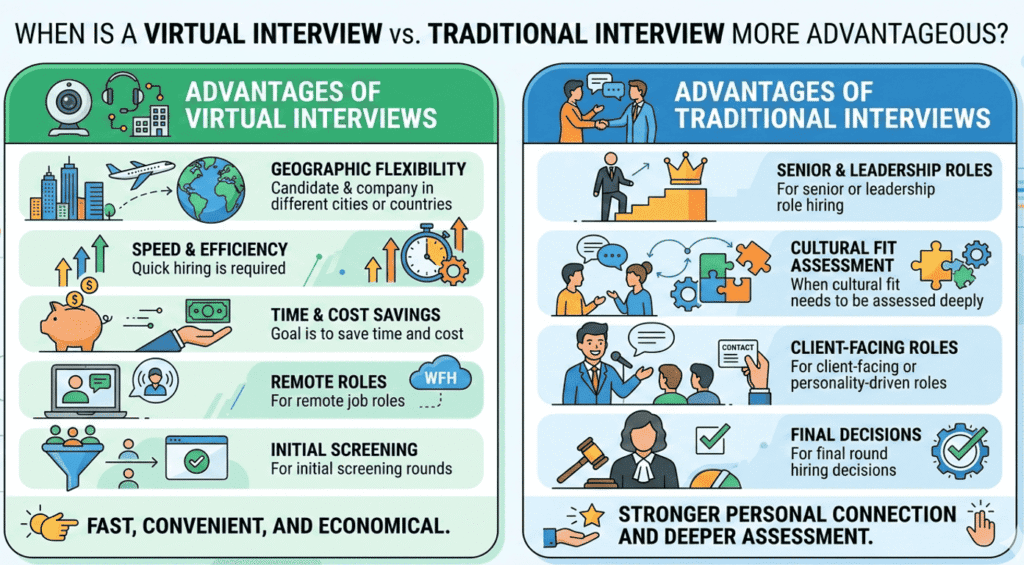
- Virtual Interviews: These are fast and cost-effective. Organizations can evaluate multiple candidates in less time. Global talent access also becomes possible. They are ideal for screening rounds, entry-level hiring, and remote roles.
- Traditional Interviews: These require more logistics and time. However, they can be more effective for senior roles and deeper evaluation because recruiters can observe the candidate more thoroughly.
8. Future Relevance and Hiring Trends:
- Virtual Interviews: have become a permanent part of modern recruitment. In the era of remote work and hybrid teams, digital communication skills and virtual body language have become essential competencies.
- Traditional Interviews: are still important for final rounds, leadership roles, and cultural fit assessment. The future hiring model will likely be hybrid, combining both formats.
Technology as Body language
In today’s digital hiring world, most people ignore one thing: technology itself has become a body language signal.
Earlier, body language symbolized facial expressions, eye contact, gestures and posture. But online interviews have expanded the definition of communication. Now, your internet connection, camera quality, lighting setup, background, audio clarity, and even your technical handling style are also seen as nonverbal indicators of professionalism.
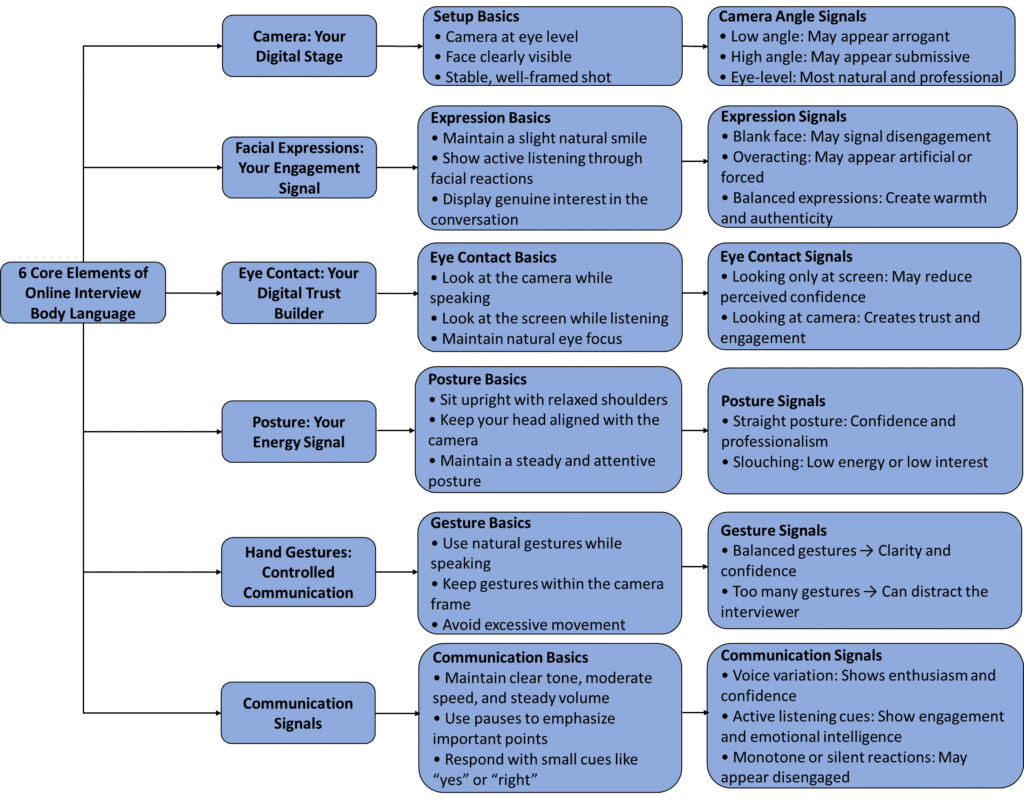
The framework below summarizes the core elements of effective virtual interview body language.
6 Core Elements of Online Interview Body Language
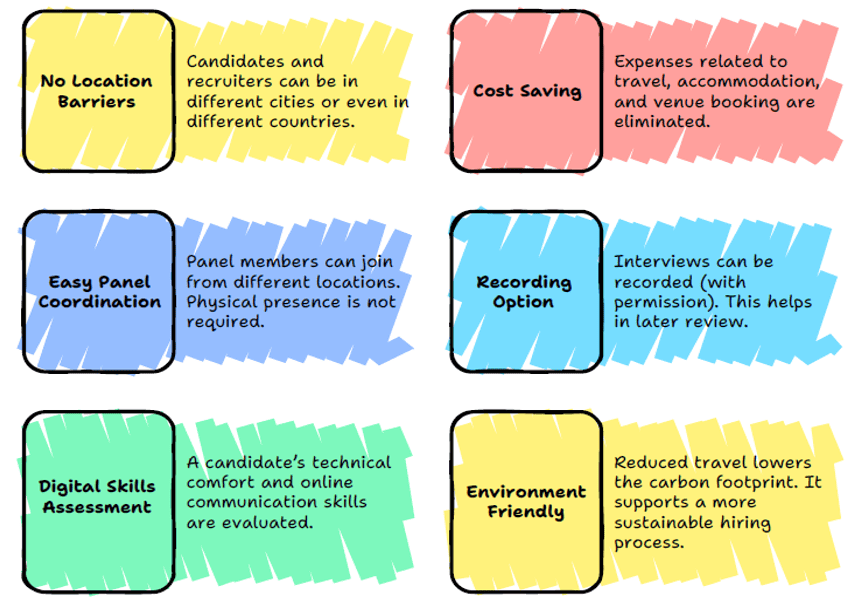
Advantages of Online Interviews
Disadvantages of Online Interviews
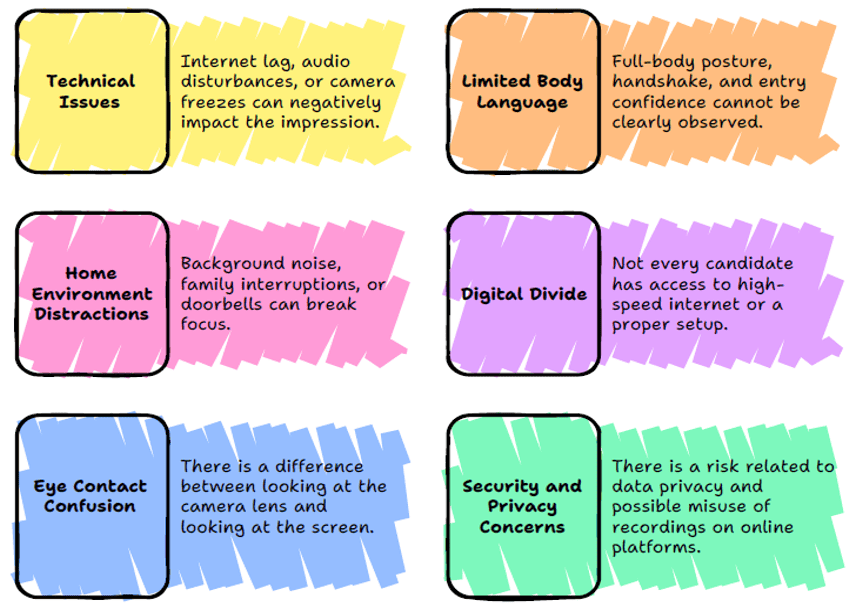
How to Master Body Language for Online Interview: 12 Steps
Step 1: Practice on Camera: Record yourself during mock conversations. This helps increase your awareness of your body language.
Step 2: Do Mock Interviews: This simulates real interview pressure, helping candidates build confidence gradually with practice.
Step 3: Strengthen Emotional Intelligence: Develop self-awareness, self-regulation and empathy, these helps improve non-verbal communication.
Step 4: Create an Interview Ritual: Use same setup, posture and energy level. This helps develop consistency and confidence.
Step 5: Focus on Energy, Not Perfection: Perfect gestures are not necessary. Authentic presence is the strongest form of communication.
Step 6: Check Your Frame Before the Call: Your head and shoulders should be clearly visible. Proper framing makes you appear more professional.
Step 7: Control Your Eye Movement: Avoid constantly shifting your gaze between the screen and the camera. A stable eye focus on camera shows confidence.
Step 8: Train Your Neutral Face: A completely blank face may appear uninterested. Maintain a neutral expression with a slight positive look.
Step 9: Slow Down Your Movements: Fast movements can look awkward on camera. Controlled movements appear more confident.
Step 10: Use Micro-Signals While Listening: Small nods and brief acknowledgments show engagement.
Step 11: Manage Your Speaking Rhythm: Pauses are important in online conversations. A clear and steady speaking pace improves communication.
Step 12: End with Composed Body Language: The final impression also matters. A calm posture and a clear closing reflect confidence and professionalism.
Simple Rule to Remember: In an online interview, technology + body language + voice shapes the overall impression. If you manage these 12 points well, you are already ahead of about 80% of the candidates.
Real-Life Mistakes Candidates Make During Online Interviews
- Last-Minute Login: Joining exactly at the scheduled interview time is risky. If a technical issue occurs, panic can begin immediately. Better: Be ready 5–10 minutes early.
- Not Testing the Internet: Connection drops during an interview are very common. Many candidates assume “it will work.” Professional approach: Test your network beforehand.
- Wrong Camera Angle: A low angle, half-visible face, or shaky camera can reduces your confidence on screen. It can also create distraction for the recruiter.
- Messy Background: A bed, clothes, or random items visible in the background can create doubts about your professionalism. Keep the background simple and clean.
- Looking at the Screen Instead of the Camera: When candidates look only at the screen while speaking, the recruiter doesn’t experience direct eye contact. This can create a perception of low-confidence.
- Monotone Voice: A flat tone with no energy can make even strong answers sound boring. In virtual interviews, vocal energy becomes even more important.
- Multitasking During the Interview: Checking your phone, typing, or looking at another screen signals distraction and disrespect.
- Over-Speaking or Interrupting: Because of virtual delays, candidates sometimes interrupt the interviewer. While others speak continuously due to nervousness. Structured and concise answers work best.
- Frozen Body Language: Some candidates become completely expressionless while on camera. No smile, no nodding, no reaction. This can make you appear disengaged or uninterested.
- Weak Closing: Simply saying “Thank you” and disconnecting creates a weak closing. A stronger close includes appreciation, interest in the role, and confidence.
Reality Check: Most candidates are not rejected because of lack of skills, but because of poor presentation and small avoidable mistakes during the interview.
Conclusion: Futures of Interviews
Online interviews are not just a temporary trend, they have become permanent part of the hiring. Professionals who learn to perform effectively in both traditional and online interviews gain a significant competitive advantage in today’s job market.
Remember this: Technology can come and go, but human psychology will always remain the same. Recruiter will always search for candidate with confidence, authenticity and emotional intelligence along with technical skills.
That’s why you should:
- Consciously develop and improve your body language,
- Learn how to adapt seamlessly in both traditional and online interview environment,
- Learn how to shine your personality through screen.
Master these things, and you will have a powerful edge in the modern professional world.
This brings us to the end of this article. If you found it helpful, feel free to share it with friends, colleagues, or anyone preparing for an online interview.
I’ll be back soon with another article. Until then, take care and bye.
4 Comments
Kamal Kant Joshi · March 10, 2026 at 11:33 am
Excellent work
Swetlana · March 16, 2026 at 6:41 am
Thank You
Pradeep Upadhyay · March 10, 2026 at 3:01 pm
Very Nice
Swetlana · March 16, 2026 at 6:39 am
Thank You