The Truth About Happiness: How It Works Inside Us
In our last blog , we discussed Facial expressions and Universal Basic Emotions. In this blog we will explore first Universal Basic Emotion of Human in detail – “Happiness“.
Although, Happiness is a small word but it contains philosophy of life.
Some say happiness is a feeling, other say it’s a state of mind. Some say if I’ll get rich, I’ll be happy, others say, if we find peace in our relation, we will find happiness.
But, Have you ever wondered, What actually is Happiness?
In actual, happiness in not an external thing. It is an internal mechanism, a biological response, a psychological strength and a daily practice of life.
In this blog, we will explore happiness through simple science, practical psychology, real-life examples, and everyday tools. We will also understand the internal triggers that quietly activate genuine happiness.
So, let’s begins:
What is Happiness?
Happiness is that pleasant emotional state where an individual feels safety, satisfaction, meaning and purpose in life.
Just like we learned in our first blog, emotions always appear through Body Language. Happiness naturally shows up on the outside, through relaxed muscles, genuine smiles, softer eye expressions and an open, comfortable posture.
Happiness doesn’t comes from external situations like hugs, compliment, achievement or sunlight, it only gets triggered from these situations.
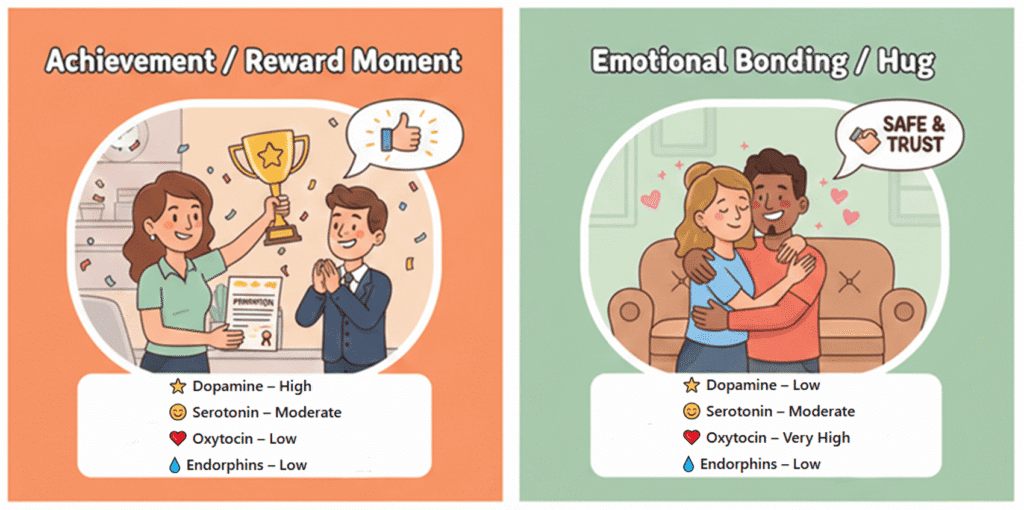
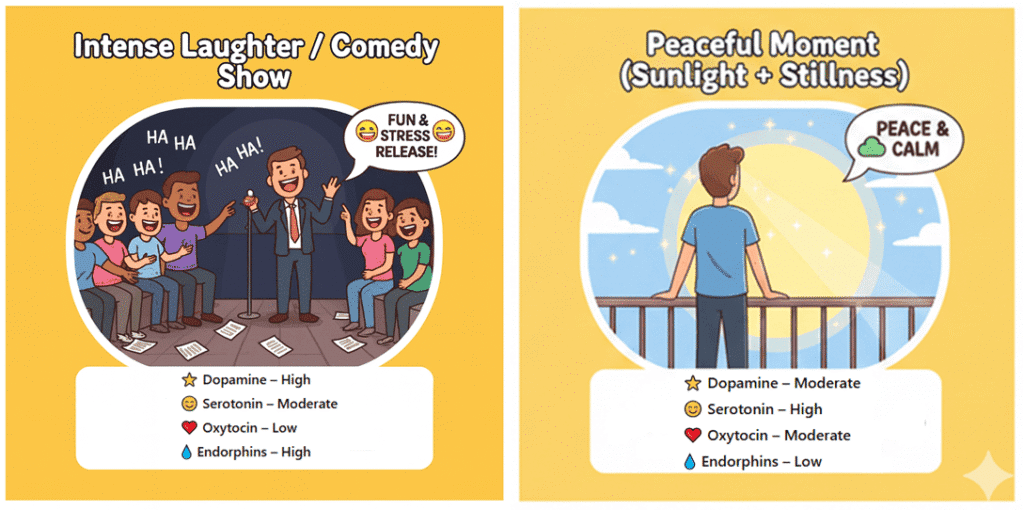
When any positive event, gestures or environment, makes our brain feel physically safe, emotionally secure, mentally calm and socially connected. Our brain process these events and as per situation it release 4 chemicals in different combination: dopamine, serotonin, oxytocin & endorphins.
Where:
1. Dopamine : chemical is released when we achieve any goal, gets appreciated, gets any rewards or feel any new experience. This is released mostly in reward based situations.
2. Serotonin : This chemical is released when we feel mood stability, sunlight, calm routines, or when feel respected or valued.
3. Oxytocin : This chemical is bonding chemical and is released during relationships, trusts, support, hugs and emotional connections.
4. Endorphins : This chemical is pain & stress relief chemical and is released during laughter, exercise, dancing & workout.
In actual, brain never release these 4 chemicals together. Sometimes, only dopamine get released, sometimes both dopamine & serotonin gets released. These depends upon the situations around us. Sometimes, in rare situations like, multi-sensory positive moments, like celebration, bonding events, all four chemicals get released together.
Psychology of Happiness: When we actually feel happy?
As per psychology, there are 3 components of happiness:
1) Hedonia: is a type of happiness which we feel through small term pleasure, like chocolate, celebration, achievement thrill or through social media dopamine hit. These small moments gives us quick boost, uplift our energy, temporarily brightens up our mood. But, as soon the novelty ends, happiness starts dipping.
2) Eudaimonia or Deep Happiness: is experienced when an individual feel that their life has a purpose. This happens when an individual master a skill, support someone in need, pursue career goals or work for self-growth. This type of happiness is slow, stable and long lasting, because these not only gives us pleasure but also purpose and progress too. This happiness makes individual grounded, emotionally strong and with full filled mentality.
3) Engagement or Deepest Happiness: is that flow state where an individual gets deeply involved within an activity to perform his best. During this, person doesn’t pay attention to time, stress and even self conscious, like during painting, teaching or coding. In this flow, focus, creativity and dopamine naturally aligns with one another. This is the purest and deepest form of happiness as a person feels pleasure, purpose and mastery during this flow. Further, this flow mentally recharges person and gives meaning to life.
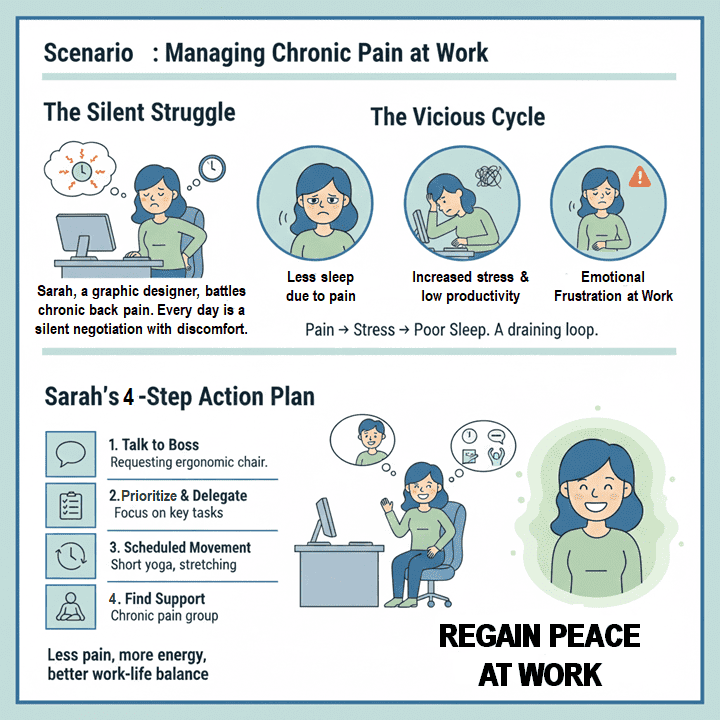
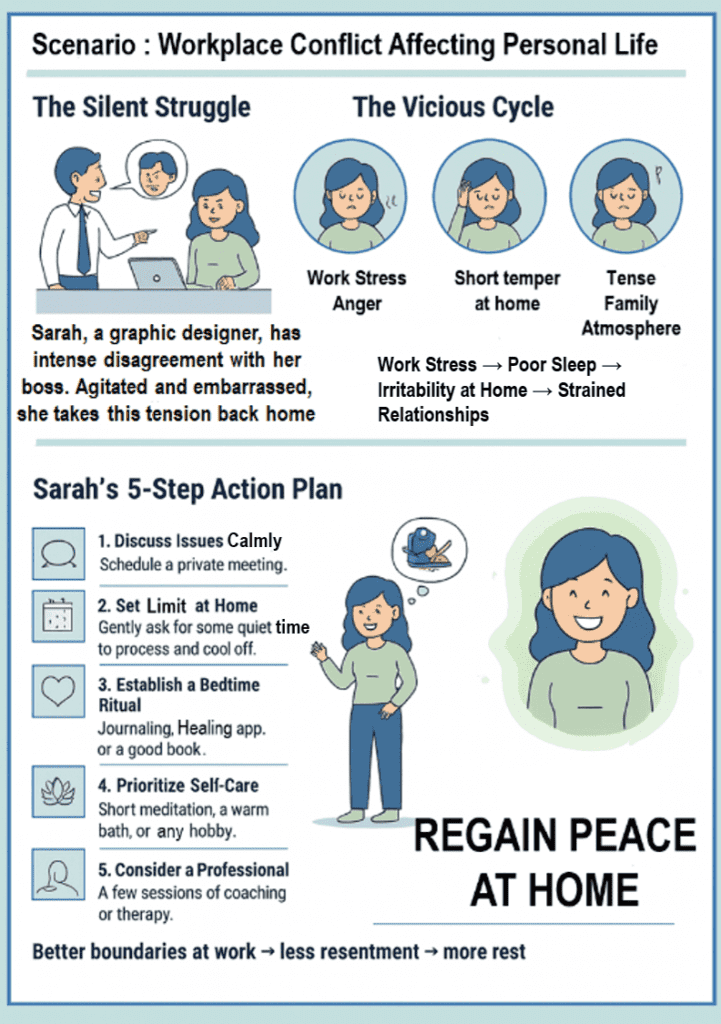
Case Study: The Two-Way Cycle of Happiness Between Personal and Professional Life
Base of professional happiness depends upon safety, recognition, autonomy, growth, fair treatment, and meaningful work. If any of these area got disturbed, happiness dips automatically.
An individual spends around 60% of his life at work. Thus, happiness shapes emotional stability, motivation and overall well-being. When we feel safe, valued, respected and purposeful at our work, our brain naturally release balanced amount of dopamine, serotonin & oxytocin. But in case of stress, unfair, toxic and exhausting situation at workplace, it can disrupt personal life happiness.
This is a two-way connection: As work stress can disrupt personal happiness, stress from personal life can affect work performance, focus and mood.
Case1 :
Case 2:
Impact of Professional happiness on an individual:
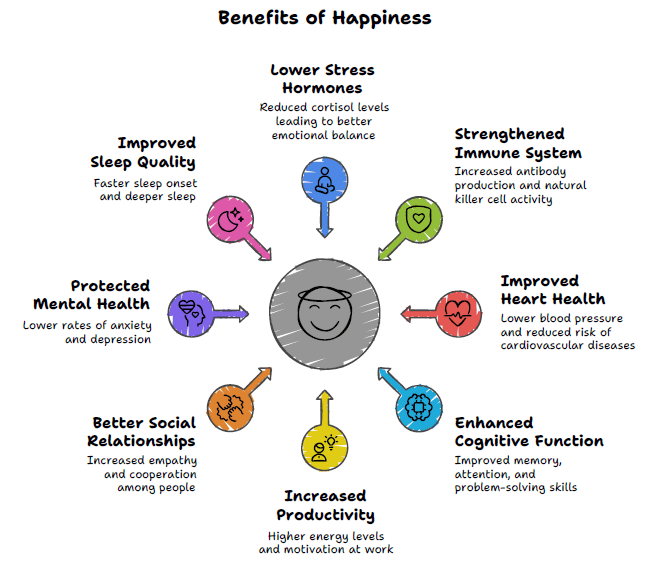
- Individual productivity increases when their mind is stress-free, resulting in higher productivity and faster, more efficient completion of work.
- Positive mood activates prefrontal cortex of a person, which allows free flow of ideas, improving both problem solving and innovation.
- Happy individual works with logical choices, resulting in clear judgement and less impulsive decisions.
- Happiness increases employee’s stress resilience, helping them to bounce back from setbacks.
- Happiness reduces cortisol (stress hormone) of an individual, which helps with sleep, heart health and makes immunity strong.
- Happy individual is cooperative, respectful and empathetic in nature. They particularly works to reduce frustration, anger and works to strengthen team bonding and trust.
- Happy employees don’t get mentally drained. Their energy cycle is balanced, thus they easily avoid emotional exhaustion.
- Happy individuals are proactive in nature, take ownership in their work, and get noticed by top management for promotions, new project opportunities and for leadership roles.
Factors that destroy or hamper Professional happiness:
- Toxic workplace: is a place with gossips, blame game, politics, humiliation or fear based culture. Here, Employee brain always work on survival mode, resulting in high cortisol, low oxytocin. This result in poor trust issues, chronic stress, zero creativity and no engagement.
- Poor leadership: When manager is biased, unfair, rude, credit stealing or non-appreciating person, employee felt “I am not valued here”, this lead to serotonin drop, resulting in motivation drop. This is one of the common reason employee switch to another place.
- Lack of recognition: Recognition work as emotional fuel in an employee, but when appreciation is missing, work starts to feel robotic, motivation fades resulting in burnout as dopamine–serotonin both dips together.
- No work life balance: 24/7 availability and unrealistic deadlines overloads nervous system, resulting in cortisol rise and lowering happiness.
- Micromanagement: by team leader can suffocate employee as micromanagement symbol for ” I don’t trust you”. This can be biggest cause to drop dopamine.
- Job insecurity: the thought about this can wipe out serotonin, resulting in activating threat mode in brain and reducing positivity.
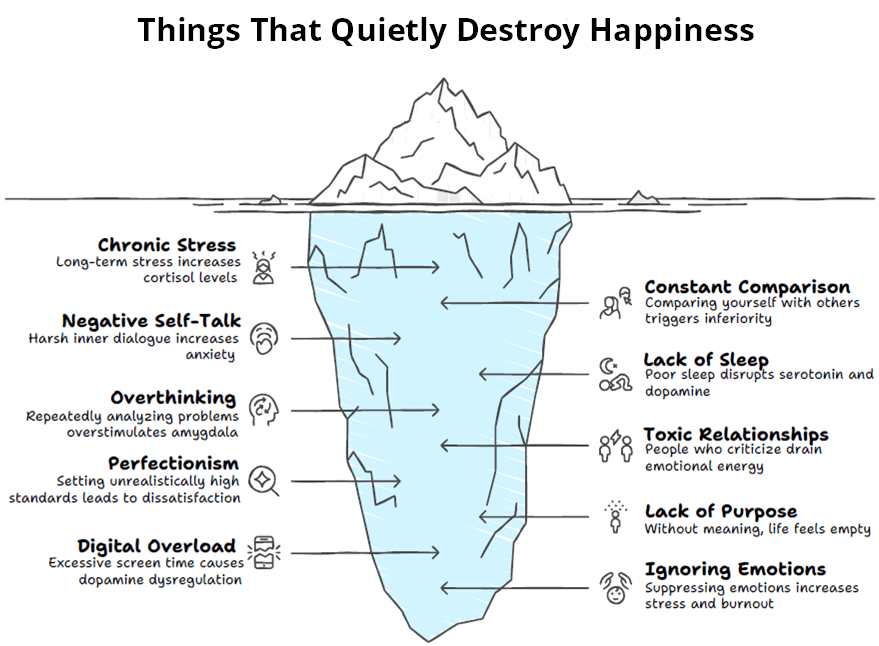
Happiness not only depends on external situations, but also on brain wiring, stress chemistry, emotional habits and lifestyle choices.
Human brain is designed for survival mode, that’s why it notice negative thing first and can’t hold positive emotions.
High cortisol blocks happy chemicals like serotonin, dopamine & oxytocin, resulting in mood instability.
Overthinking, unresolved emotional pain, comparison culture, unrealistic expectations, toxic bonds, & present-moment awareness can weaken the happiness. This leads to a feeling that life is meaningless or that self-worth is tied only to achievements. In such cases, happiness won’t sustain for long.
When these internal and external factors stay unaddressed, happiness becomes unstable and short-lived. But the good news is that our brain is highly adaptable. With healthier habits, supportive environments, and intentional emotional practices, stress chemistry can be reversed, happy chemicals can be restored, and long-term professional happiness can be rebuilt.
In short: Happiness is not fixed. It can be trained, strengthened, and protected.
Challenge yourself: 5 step system for 21 days
- Take 15 minutes of sunlight every morning, this will lift your mood instantly as serotonin gets release.
- Do some light exercise, walking, yoga, or whatever u like, it boosts endorphins (feel-good chemicals) and helps you manage the stress.
- For dopamine detox, keep social media aside & spend 1 hour doing your favorite activity to activate deep work flow.
- Spend time with friend and family to discuss meaningful conversation, this will provide you emotional support.
- Celebrate your micro achievement, it will boost your dopamine and encourage your or tomorrows work.
When you repeat these habits for 21 days, your brain begins rewiring itself. Stress chemicals reduce, happy chemicals become consistent, and your emotional stability improves.
You don’t just feel happier, you become more focused, grounded, and self-driven.
How Happiness improves relationships
Happiness transform relationship from inside. When an individual is unhappy, they get triggered easily over minor things, which lead to conflicts and resulting in unstable relationship.
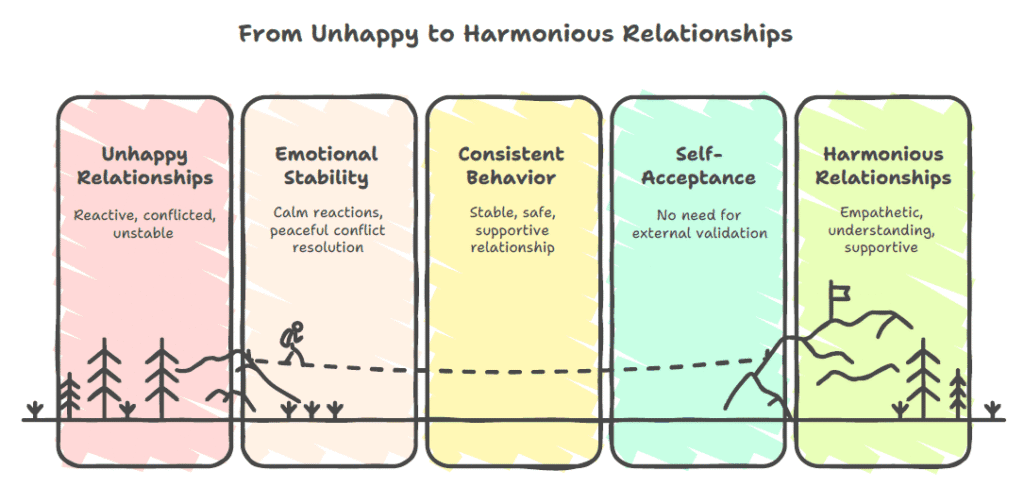
As emotional stability develops, responses become calmer, arguments don’t escalate, and problems get solved more peacefully. Happiness also makes behavior more consistent, giving the partner a sense that the relationship is safe and supportive. Next comes self-acceptance, where a person no longer depends on external validation & accept themselves “As They Are”. Here, you naturally offer more space, respect, and understanding to your partner. The final stage is a harmonious relationship, where empathy, trust, and mutual support flow naturally. Overall, happiness works like an internal engine that shifts a relationship from a reactive stage to a deeply connected and peaceful phase.
Conclusion: Happiness is not a destination, It’s a daily practice. If you take a walk, write a gratitude, do mindful breathing and work on your goals. Then your brain will automatically create happiness.
At the end I will say real happiness comes with calm mind, secure heart, disciplined routine and meaningful goals.
With this, I will end this blog , and will meet you with second Universal Basic Emotion.
Till then .. Bye & take care.
0 Comments