The Truth About Anger: What Really Happens Inside Us
In our previous blog we explored about Sadness, in this blog we explore another universal basic emotion: Anger.
Anger is an emotion everyone feels but rarely talks about it openly. Most of the time people say: I’m ok with the situation, I don’t feel anything. But in reality: Anger is universal. It is present inside every human. But the interesting part is that anger is the outcome of one’s unmet expectations which brings sadness, when suppressed converts into anger.
Let’s understand this critical and most misunderstood topic of Anger in detail:
Anger is a fundamental human emotion which activates when a situation violates our emotional , personal and social boundaries. It is an intense reaction which signals a person, about the situation which goes against his values, expectations and dignity. It functions as an internal alert system which is designed to protect us from physical danger, emotional injury, boundary violation and unfairness & injustice and suppressed pain.
Let’s take a common workplace anger scenario:
You’re in a monthly team meeting. When it’s your turn to present, you begin confidently but mid-way, your manager interrupts and says:
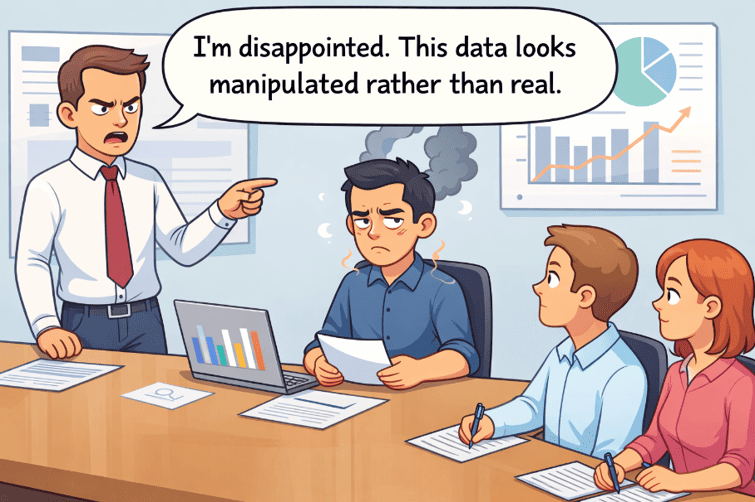
Your explanation is dismissed, and you’re asked to redo the work. What happens inside you? The first reaction isn’t anger. It’s embarrassment, shame, hurt then anger follows.
During meeting, you don’t argue back. You know reacting emotionally may label you unprofessional or defensive. The meeting moves on, but your mind doesn’t. Praise for others feels louder. Silence around you feels heavier.
Later, clarity arrives. The anger didn’t begin in the meeting. It began after the public loss of credibility. Anger became emotional armour, because admitting hurt feels unsafe at work.
So the response isn’t public. It’s private. At this point : You channeled your anger into preparation, not in venting your reaction out.
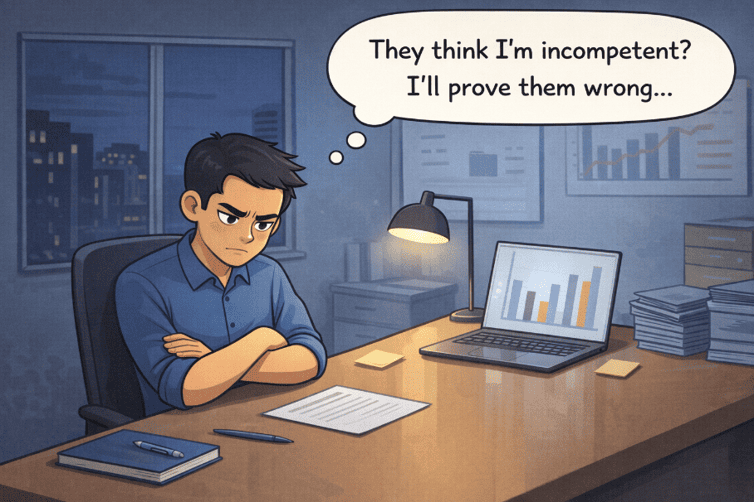
You document your data and request a one-on-one. This isn’t submission. This is control.
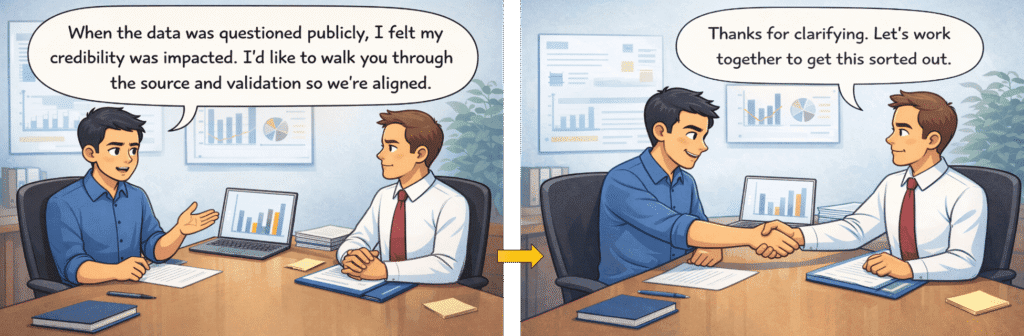
With proper strategy, anger stops being emotional noise and becomes strategic energy.
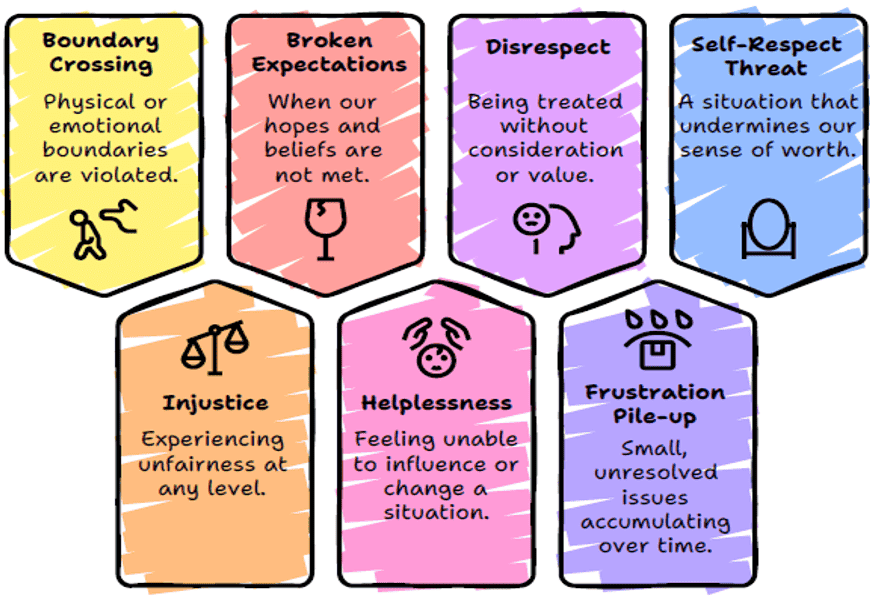
What situations triggers anger:
Anger as a natural defence mechanism:
Anger is a biologically designed survival emotion, which is a part of human nervous system. Like pain signals injury, anger signals us about emotional, psychological and social threats, like – disrespect, injustice or boundary violation.
During evolutionary times, anger has protected humans not only from physical danger but also from social danger like domination, exclusion and exploitation.
Anger shifts the body into an action ready state, ie- Fight-or-Protect Mode, which help human to stand our ground to protect their safety, dignity and resources.
Thus, we can say that evolution has developed anger as a self-defence tool not only as an aggression tool.
The real issue: Expression, not emotion
We need to understand that anger is not a negative emotion but real issue is its unhealthy expression or suppression.
Unhealthy expression: are those where a person express its anger in unhealthy ways, like :
1) Explosive Outbursts : like Shouting, breaking things & showing aggressive body language. This Instantly damages relationships & leaves long term scars.
2) Passive-Aggressive Behavior : consist of sarcasm, taunts & silent treatment. This behaviour hurt others indirectly & leaves the other person confused regarding the situation. Here, issues don’t get resolved due to no communication.
3) Chronic Irritability : here person snaps over small things & constantly feels himself on edge, resulting in emotional exhaustion resulting in health issues, like: high blood pressure, heart problems, weakened immunity.
4) Displaced Anger: here, anger toward a boss/ manager is taken out on family at home, here, the real problem never gets addressed and resulting in family problems and trauma among children.
Suppression: is another form of expression, where a person completely suppress his anger within himself, resulting in :
1) Emotional Numbness : Here, feelings begin to shut down & life starts to feel on autopilot mode and disconnected, here, neither happiness nor sadness is fully felt.
2) Depression and Anxiety: Suppressed anger continues to build internally which leads to chronic stress, low self-worth, and hopelessness.
3) Physical Symptoms : suppressed anger lead to frequent headaches or migraines, stomach and digestive issues, muscle tension, especially in the neck and shoulders.
4) Sudden Emotional Breakdowns : occurs after suppression of anger for months or years. Here, a small trigger causes a complete emotional collapse & the intensity of the outburst can be shocking even to oneself.
How Brain process anger:
During anger, Amygdale: emotional centre of brain instantly activates, due to which Prefrontal cortex: rational part of brain, slows down.
Resulting in :
- Increase in emotional reaction
- Temporarily reduction of logical thinking
- Increase in Fight-or-flight hormones : cortisol & adrenaline
- And body shifts into high energy state
During anger our brain releases 3 chemicals: Adrenaline, Cortisol and Noradrenaline. Where, Adrenaline provides instant action & fight energy, cortisol intensify alertness & emotional intensity & noradrenaline sharpens the focus. But in extreme stress these hormones creates impulsiveness, anxiety & tunnel vision (where brain fixates on a single perceived threat or problem.
This chemical storm directly impacts our face, body, breathing and our communication.
Body Language during anger:
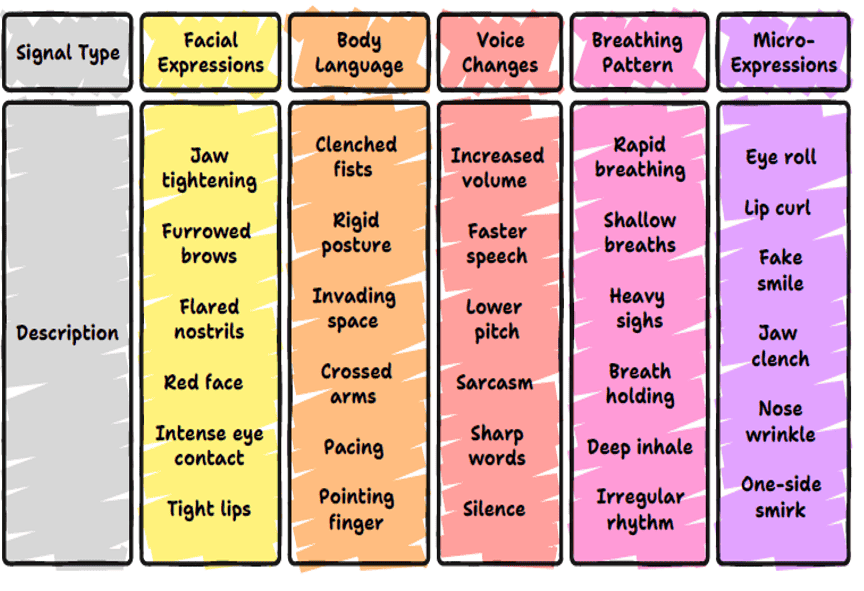
These signals matter for self-awareness, for understanding others, for professional settings & in relationships. These signals are universal across every culture, but intensity and expressions vary as per culture. Where, few cultures encourages open expression, few prefer suppression.
In my opinion, when we become able to recognize our and others anger signals, We can :
- Consciously respond instead of reacting
- Can defuse situations
- Can start healthier communication
- Can protect our relationships
When we see anger, we blame the person for showing us that anger, but in most of the cases, anger is not the cause, it is the consequences.
Why is the person who shows anger often blamed?
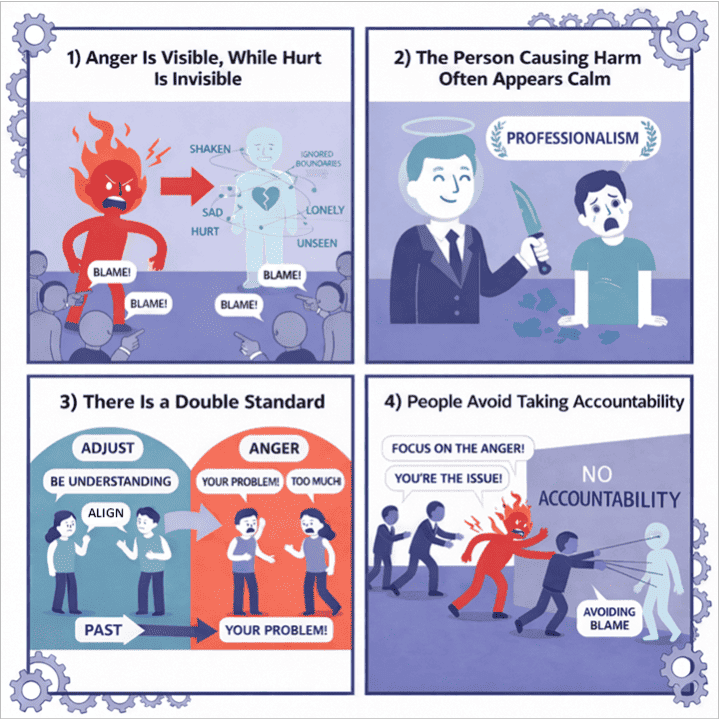
Important thing to consider, person showing anger is not always the villain. Most of the time, the person who deliberately causes harm to others are more dangerous, as they portray themselves with calm and composed behaviour while repeatedly hurting others silently.
Impact of anger on professional life:
Productivity loss: As the brain shifts to fight mode, focus and efficiency starts dropping.
- Creativity block: When the prefrontal context temporarily shuts down, innovation and creativity becomes impossible.
- Poor decision making: Increase in impulsive choices lead to emotional decision rather than logical ones.
- Energy Drain: High cortisol leads to fatigue, irritability and constant stress.
- Risk of Attrition: Workplace anger often leads to employee resignation.
Factors that destroy Professional emotional balance:
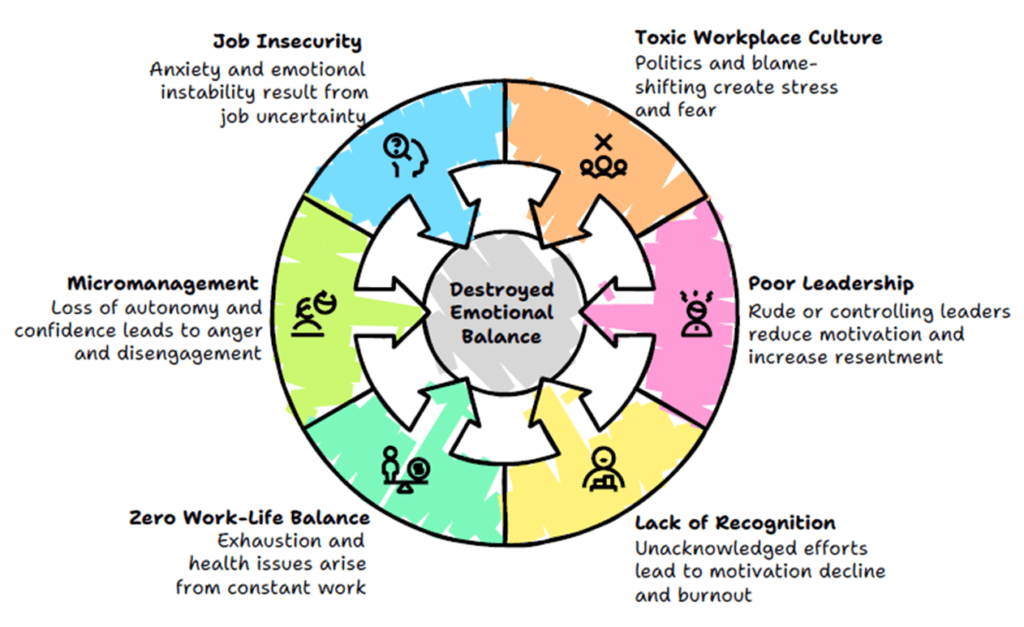
For an employee, it is unhealthy to suppress anger, similarly, it is career damaging if the anger explodes. So an employee have to channel anger to set:
- Clear boundaries
- Firm communication
- Strategic action
- Professional advocacy
These channels can help employees to convert their anger into assertiveness, which can help increase their credibility.
Internal factors that increase anger:
Apart from external factors, internal factors also triggers or amplifies person’s anger, few are:
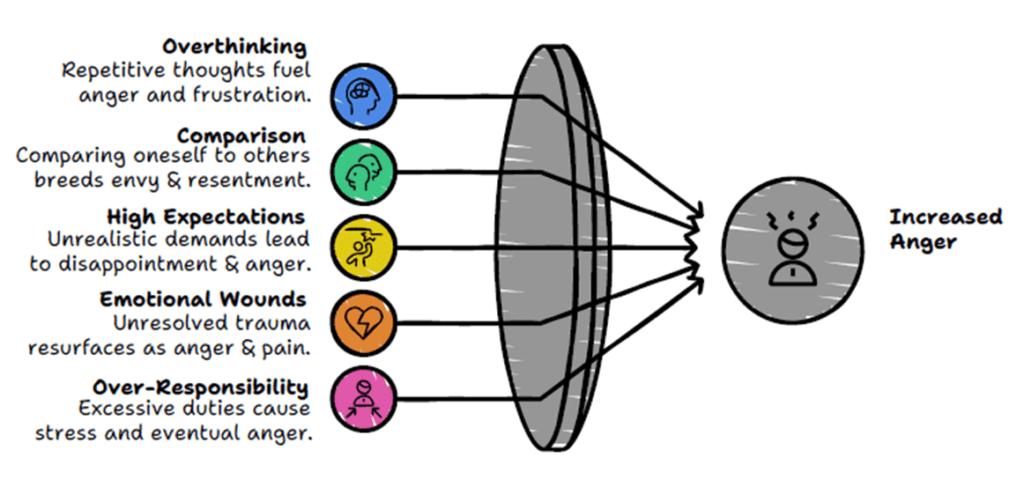
When these factors stay unaddressed, anger becomes:
- Faster (trigger easily)
- Louder (intensity high)
- Frequent (daily episodes)
- Deeper (root issues strengthen)
5-Step Anger Reset System (21 Days Transformation):
These are few science backed 21 days practical techniques by which a person can change his anger patterns:
1) 60 second pause technique: During anger, pause for 1 minute, don’t speak, don’t do anything. Just, count backward from 60. This helps:
- In dropping adrenaline naturally
- Prefrontal cortex start working again
- Can help in avoiding Impulsive damage
2) 5-4-3-2-1 Grounding Technique: I personally use this technique for calming myself down in stressful situations, For this :
- See 5 objects near you, like box, bottle, etc
- Listen 4 voices near you, birds, metro, etc
- Feel 3 things, they may be stairs, walls or sunlight
- Smell 2 things, anything
- Say 1 sentence : I’m safe and I’m fine
This technique changes mind from past/ future and brings back in present state. It breaks overthinking and anxiety loop, further, ends emotional overwhelming. This technique uses sensory grounding. It signals amygdala (fear centre) of brain to calm down, so that person can feel safe again.
When to seek professional help:
At some point when self-help doesn’t work, it is ok to seek professional support, Example:
- There is repeated relationship damage
- Anger impacting daily routine
- During physical aggression, where person loses his cool and start destroying things
- In case of suicidal or self harm thoughts
- Person develops habit of substance abuse
Most of the time, society thinks, a person must be weak to seek therapy, but therapy helps to break those difficult patters which a person alone is unable to break. What Therapy Offers:
- Safe space to process emotions
- Tools to regulate anger
- Addressing root causes
- Healthier coping mechanisms
- Relationship skills
- Trauma healing (if applicable)
Self-Compassion : The missing element:
In anger management, self-compassion is very important part, which people generally skips. During anger, people starts to blame themselves, they start overlooking the situations and triggers which lead them to that point.
For a person to start self-compassion:
- They need to acknowledge their mistakes, rather than denying it
- They should forgive themselves, as self-punishment is not helpful
- They should commit to change the pattern of their mistakes
- At last person should start celebrating progress, rather than expecting perfection in themselves
Conclusion : Anger is not a problem, its management is. Problem starts when we suppress the anger or let it explode. As both the cases are extremely harmful.
If a person understand his anger and learns to handle it, then :
- Overall life balance and stability improve
- Interpersonal relationships strengthen
- Professional effectiveness and workplace performance increase
- Mental and emotional resilience becomes stronger
At the end I would say that, anger is not to be controlled. anger is to be understood, regulated, and transformed.
With this, I end this blog here. I will see you soon with the next universal emotion. Till then … Take Care and Bye.
0 Comments