The Power of Eye Contact in the Workplace: What HR Leaders and Managers Need to Know
In today’s fast-paced, hybrid and multinational workplace, eye contact is not just a matter of etiquette, but it has become a skill for strategic communication. HR professionals, managers and leaders need to understand that eye contact significantly impacts employee engagement, confidence, authority and trust.
Many professionals ignore this skill because they feel the main focus of communication should be on words and content. But in reality, a major part of workplace perception is based on non-verbal cues. As per research, people observe others’ behaviour before they evaluate one’s behaviour. Nowadays, there are many situations in corporate life where eye contact is used for :
- Trust building
- To create leadership presence
- For emotional safety
- To reduce misunderstanding
- To create strong influence and build persuasive impact
In this article, we will discuss eye contact as a strategic workplace skill and its role in building trust, confidence, and leadership presence. We will explore the psychology behind eye behaviour and how fear, power dynamics, and emotional intelligence influence professional interactions.
The article will also examine different types of eye contact, when to use them, and how balance impacts credibility and engagement. Finally, we will highlight common mistakes and the future of eye contact in hybrid, digital, and AI-driven workplaces. So let’s begin:
Eye contact means consciously looking into someone’s eyes while communicating with them. In simple terms, eye contact communicates: “I am present, I am listening, and you are important to me.”
In a professional context, eye contact is an intentional behavioural signal that shows:
- Confidence
- Interest
- Respect
- Authority
- Emotional connection
When an employee avoids eye contact in a meeting, they are not always considered shy. Sometimes they are perceived as insecure, disengaged, and dishonest.
Types of Eye Contact in Professional Settings
In the professional world, it becomes very important to understand which type of eye contact to use, when to use it, and when it should be avoided.
1) Direct Eye Contact: is a strong signal of confidence, authority, and clarity. It shows that you are confident in your message, transparent in your intent, and possess a leadership mind-set. In professional environments, it quickly builds trust and credibility.
Best situations to use direct eye contact:
- Presentations and public speaking
- Negotiations and stakeholder meetings
- Leadership and team discussions
- Explaining vision, strategy, or goals
- Giving performance feedback
Too much direct eye contact can create discomfort or pressure. Avoid prolonged or continuous eye contact in:
- Conversations with junior employees (it may feel dominating or intimidating)
- Interviews (excessive eye contact can make candidates nervous or uncomfortable)
- Difficult or emotional discussions
- Conflict or disciplinary situations
In these cases:
- Use softer eye contact
- Look away occasionally
- Increase eye contact while listening to show attentiveness
- Adjust based on the other person’s comfort
This creates a psychologically safe and supportive environment, which is critical in modern workplaces.
2) Soft Eye Contact: creates a warm, empathetic, and supportive connection. It signals emotional intelligence and psychological awareness. For HR professionals, this approach is especially important because coaching, counselling, and employee grievance conversations require emotional safety and trust.
Soft eye contact helps reduce anxiety and defensiveness. It makes employees feel heard, respected, and valued. As a result, they are more likely to share concerns, feedback, and personal challenges openly. In modern workplaces, this strengthens trust, engagement, and long-term employee relationships.
Best situations to use soft eye contact:
- Coaching and mentoring conversations
- Counselling and emotional support discussions
- Employee grievance handling
- Conflict resolution and mediation
- One-on-one check-ins and performance development
- Sensitive workplace conversations
Overly soft eye contact in authority-driven situations may create confusion or reduce credibility. Avoid excessive soft eye contact in:
- Performance warnings or disciplinary conversations
- Compliance and policy-related discussions
- Decision-making and high-accountability meetings
- Crisis or escalation situations
- Negotiations requiring strong authority
In these cases:
- Use more direct and structured eye contact
- Maintain confidence and clarity in communication
- Balance empathy with authority
- Focus on outcomes while staying respectful
This balanced approach helps HR professionals maintain both empathy and leadership credibility, which are essential in complex workplace environments.
3) Intermittent Eye Contact: is the most natural and balanced form of professional eye contact. In this approach, you maintain eye contact, take short and natural breaks, and then reconnect. This pattern reflects confidence, comfort, and conversational ease. It prevents eye contact from feeling intense or uncomfortable while still maintaining engagement.
In professional environments, intermittent eye contact works best in collaborative and informal settings. It signals equality, openness, and mutual respect. People perceive the interaction as natural and conversational rather than formal or intimidating. This makes it especially effective for building relationships, improving team dynamics, and encouraging participation.
Best situations to use intermittent eye contact:
- Team meetings and group discussions
- Informal conversations and networking
- Brainstorming and collaboration sessions
- Cross-functional communication
- Peer-level interactions
- Relationship-building conversations
Excessive or poorly timed breaks in eye contact may create negative perceptions. Avoid frequent or poorly timedcontact breaks in:
- Important or high-stakes discussions
- Performance reviews and feedback sessions
- Negotiations or decision-making meetings
- Presentations or leadership communication
- Situations requiring strong credibility and focus
In these cases:
- Maintain more consistent and direct eye contact
- Avoid looking away too often
- Stay present and engaged
- Use pauses thoughtfully to show reflection, not distraction
This balanced use of intermittent eye contact helps professionals maintain trust, credibility, and connection, while ensuring communication remains natural and effective in modern workplaces.
4) Intense Eye Contact: signals power, seriousness, and strong intent. It reflects authority, urgency, and high focus. When used appropriately, it creates impact and reinforces leadership presence. However, if not controlled, it can feel intimidating or overwhelming, especially in sensitive or people-focused situations.
In professional environments, intense eye contact is most effective during high-stakes or critical conversations. Leaders use a focused gaze to communicate clarity, urgency, and confidence. It helps ensure that the message is taken seriously and understood without ambiguity. This style is often seen in crisis leadership, tough negotiations, and difficult decision-making scenarios.
Best situations to use intense eye contact:
- High-stakes discussions and negotiations
- Crisis communication and escalation meetings
- Conflict resolution and difficult conversations
- Delivering firm or non-negotiable decisions
- Leading during uncertainty or pressure
- Situations requiring strong authority and control
Overuse of intense eye contact can create discomfort, fear, or emotional distance. Avoid excessive use of intense eye contact in:
- Daily workplace interactions
- Team bonding and informal conversations
- Coaching, mentoring, and emotional support discussions
- Employee engagement or trust-building activities
- Conversations with new or junior employees
In these cases:
- Use softer and more relaxed eye contact
- Focus on warmth and approachability
- Adjust based on the emotional state of the other person
- Balance authority with empathy
This balanced approach helps professionals maintain leadership strength while also creating a psychologically safe and inclusive workplace environment.
Balance: Too Little vs. Too Much Eye Contact
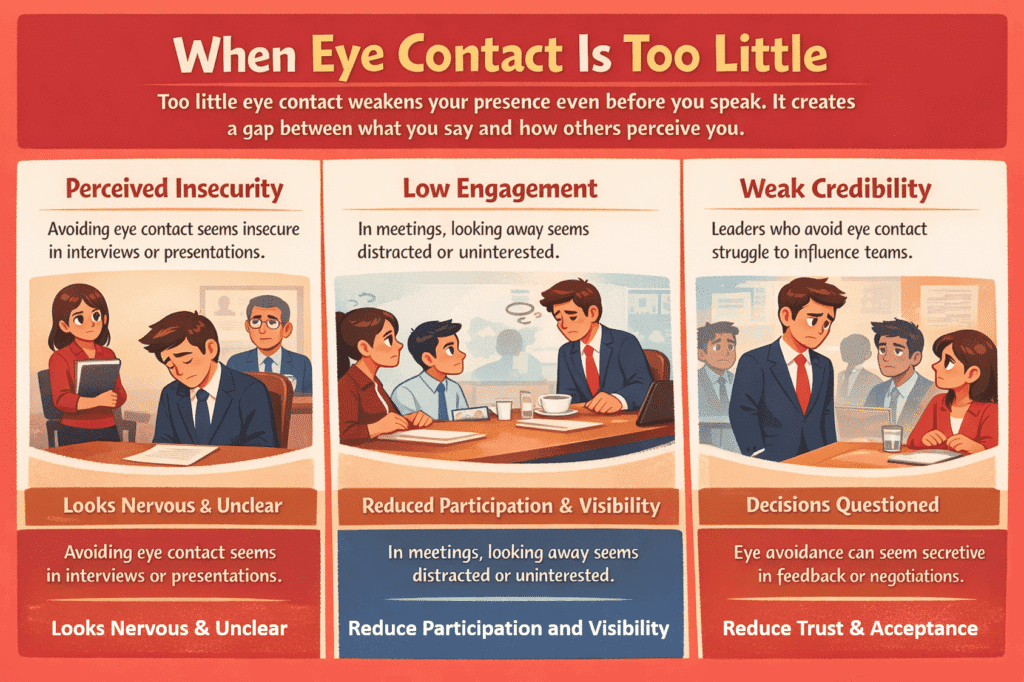
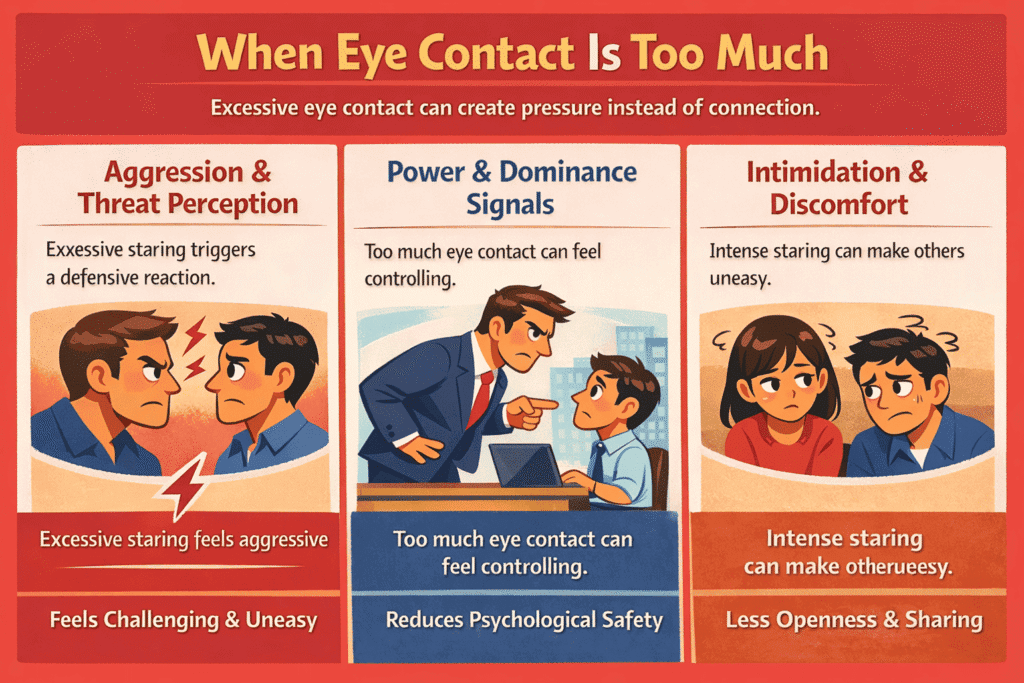
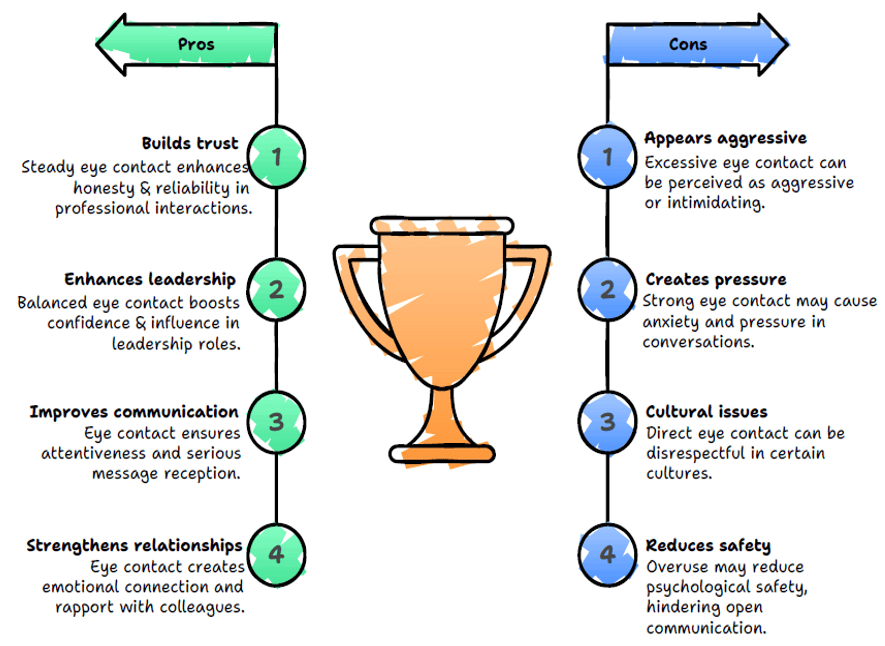
In professional environments, eye contact is not about intensity or avoidance. It is about control, timing, and awareness. The way you manage eye engagement signals confidence, credibility, and emotional intelligence. This is why controlled eye contact is often seen as a sign of professional maturity.
When Eye Contact Is Too Little
When Eye Contact Is Too Much
Eye contact and confidence
In the workplace, an employee is evaluated not only on the basis of knowledge, qualifications, or technical skills but also on the basis of one’s non-verbal communication. Eye contact is one of the strongest indictors of professional confidence because it directly reflects self-assurance, clarity of thought, and emotional stability.
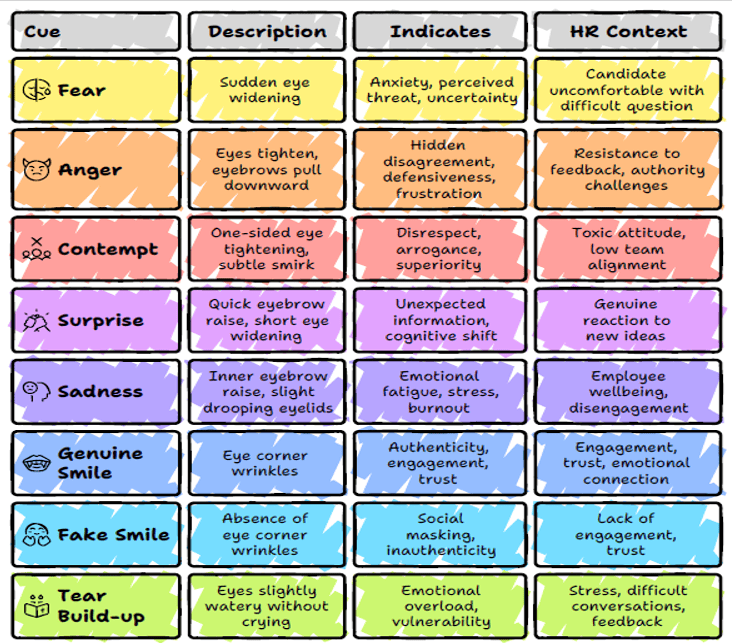
Micro Cues of Eye Behaviour
Eye contact and Emotional Intelligence
Emotional intelligence has become a critical competency for workplace success. In today’s leadership and HR frameworks, IQ or technical knowledge alone is no longer considered sufficient. Professionals must develop the ability to understand, regulate, and respond effectively.
One of the major components of emotional intelligence is emotional awareness and appropriate response. Eye contact provides significant strength to this by helping to decode emotional cues and building meaningful connections.
Role of eye contact in Emotional awareness:
- Eye contact helps in noticing subtle emotional cues such as micro expressions, facial tension, eye movement, and pupil dilation.
- It helps emotionally intelligent leaders to identify hidden stress signals and detect early signs of stress and anxiety.
- Consistent eye contact help build trust, comfort, and interpersonal warmth among employees.
- Balanced eye contact helps employees feel that their thoughts and concerns are genuinely valued.
- In the long term, this trust-based workplace culture helps improve employee engagement and retention.
- Helps during difficult conversation like performance reviews, conflict resolution, and grievance discussions by providing emotional safety and enhancing clarity.
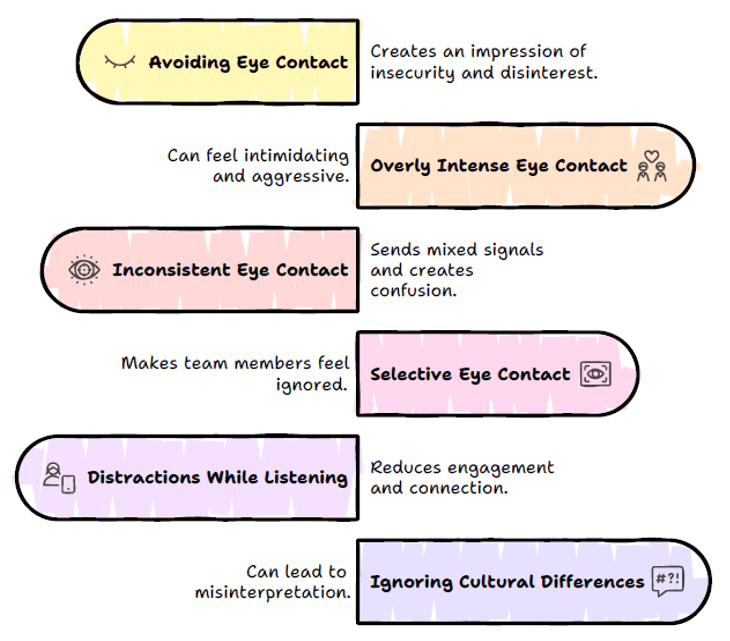
Eye Contact Mistakes Professionals make
Future of eye contact: AI, Digital and Human connection
With the rise of remote work, virtual meetings, AI tools, and automation, the role of eye contact is evolving with time. In the future, eye contact will not be limited to physical interaction, it will become a bridge between digital and human connection.
New meaning of Eye Contact in Virtual Communication
- Camera Eye Contact in Hybrid Work
In hybrid and remote workplaces, video meetings are routine. Looking into the camera is now as important as physical eye contact. It creates a sense of direct connection, strengthening trust, engagement, and clarity. - AI and Non-Verbal Communication Analytics
AI tools are increasingly analysing communication patterns. Interview platforms, leadership assessments, and training systems can track eye movement, facial expressions, and engagement. In future HR roles, these insights will help assess confidence, emotional intelligence, and authenticity. Professionals must therefore develop natural and effective eye contact skills. - Digital Fatigue and the Need for Human Connection
Excessive screen time is increasing digital fatigue and emotional disconnect. In the future, genuine interaction and authentic eye contact will play a critical role in emotional bonding, team trust, and employee well-being. - AR and VR Communication
Augmented and virtual reality workspaces are evolving. Immersive environments will include realistic eye-tracking and digital presence. Professionals will need to understand digital body language to communicate effectively in these spaces. - Emotional Intelligence and Authentic Presence
Automation will replace repetitive tasks, but human skills, like empathy, trust, and active listening, will become more valuable. Eye contact will remain a visible indicator of emotional intelligence. Future leaders will balance technology with meaningful human connection. - Cross-Cultural Communication
As global workforces grow, cultural sensitivity in eye contact will become essential. Leaders will need to adapt their approach based on context and cultural expectations. - Personal Branding in the Digital Era
In LinkedIn videos, webinars, virtual presentations, and online networking, strong eye contact strengthens personal branding. People are more likely to trust professionals who appear confident, transparent, and authentic on screen.
Conclusion: Eye contact may look like a simple habit, but it has a deep and transformational impact. It helps in shape trust, empathy, confidence, and leadership presence.
For HR professionals, this is not just a communication skill, but it is part of organisational culture. When employees and leaders consciously practise eye contact, the workplace becomes more open, collaborative, and psychologically safe.
With this, I will end this blog, and will meet you with another exiting topic. Feel free to share this blog with your colleagues, peers, and friends who may benefit from it.
Till then .. Bye & take care.
0 Comments